
How Does Diet Affect a Child’s Oral Health?
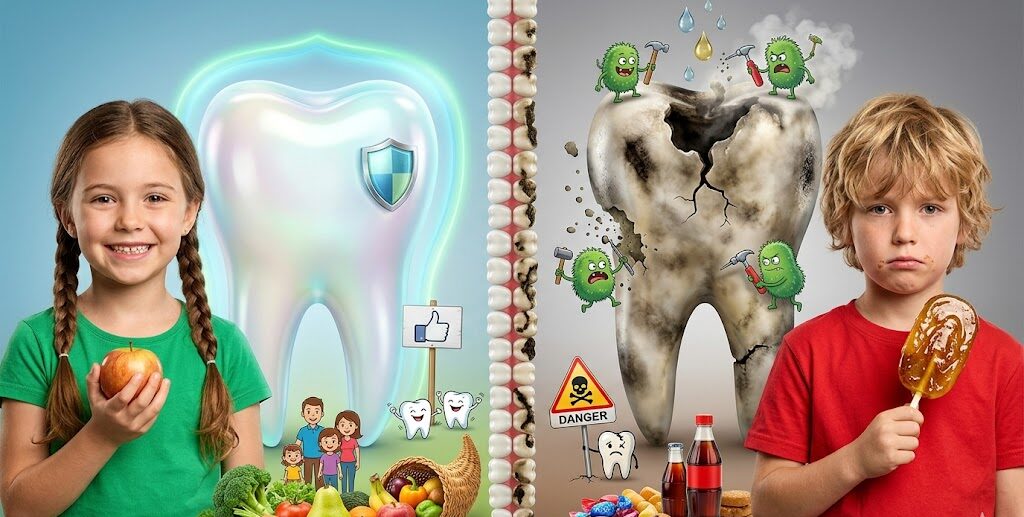
Diet affects a child’s oral health every day. Sugar, sticky snacks, acidic drinks, frequent grazing, and low water intake can raise cavity risk, while balanced meals, structured snack times, fluoride, and good brushing habits help protect growing teeth.

At 2nd Ave Family Dental in Durango, CO, I see families trying to balance school, sports, mountain weekends, work schedules, and quick snacks between activities. Diet affects children’s teeth because oral health is shaped by what kids eat, what they drink, how often they snack, and how long food stays on the teeth.
The most helpful shift is this: cavity risk is not only about whether a child ever eats sugar. It is about frequency, stickiness, acidity, brushing quality, flossing, fluoride exposure, and routine dental checkups. A child who sips juice or sports drinks all afternoon may have more acid exposure than a child who enjoys dessert with a meal and then drinks water afterward.
- How sugar, snacks, acidic drinks, and hydration affect children’s teeth.
- Why frequent grazing can raise cavity risk even when snacks seem “healthy.”
- How Durango families can build practical oral-health routines around school, sports, and busy schedules.
- When to ask 2nd Ave Family Dental for personalized diet and cavity-prevention guidance.
Why Diet Matters for a Child’s Teeth
Every time a child eats or drinks something with sugar or fermentable carbohydrates, bacteria in plaque can produce acids. Those acids weaken enamel. Saliva helps the mouth recover, but if a child snacks or sips all day, the teeth may not get enough time between exposures.
That is why I focus on patterns. A lunchbox snack, an after-school granola bar, a juice box, a sports drink, and a bedtime treat can add up to repeated acid attacks. The goal is not to make food scary. The goal is to help parents choose routines that protect teeth while still fitting real life.
Frequency Matters
How often teeth are exposed to sugar or starch can matter as much as the amount.
Sticky Foods Linger
Gummies, dried fruit, crackers, and chewy snack bars can cling to teeth and feed plaque bacteria longer.
Acidic Drinks Weaken Enamel
Soda, juice, sports drinks, and some flavored drinks can expose enamel to acid.
Water Helps Reset the Mouth
Water supports saliva, rinses food particles, and is usually the best drink between meals.
Sugar Is Not the Only Issue—Frequency Matters
A lot of parents ask me, “Is this snack bad for teeth?” I usually answer by asking how often the child eats it, how sticky it is, and whether water or brushing follows. A sweet treat with a meal is different from slow snacking all afternoon.
When kids graze, sip, or snack repeatedly, enamel goes through repeated acid exposure. Over time, that can increase cavity risk, especially in children who already have deep molar grooves, tight teeth, braces, dry mouth, or inconsistent brushing.
| Diet Pattern | Why It Matters | Better Routine |
|---|---|---|
| All-Day Grazing | Teeth are repeatedly exposed to sugars and starches. | Use structured snack times instead of constant nibbling. |
| Juice or Sports Drinks | These can expose teeth to sugar and acid. | Use water as the default drink between meals. |
| Sticky Snacks | Food can cling to molars and between teeth. | Pair with water and choose less sticky options when possible. |
| Bedtime Snacks | Food left on teeth overnight can increase cavity risk. | Brush before bed and avoid snacks after brushing. |
For related prevention guidance, read how to prevent cavities in children, how to prevent baby bottle tooth decay, and whether cavities in baby teeth can affect permanent teeth.
Snacks That Can Help or Hurt Children’s Teeth
Parents in Durango are often packing snacks for school, daycare, ski days, trail time, sports practice, and long drives. Snacks are part of family life. The goal is not to eliminate snacks. The goal is to choose them with teeth in mind.
Tooth-friendlier snacks tend to be less sticky, less sugary, and easier to clear from the mouth. Cheese, plain yogurt, nuts for older children who can safely chew them, crunchy vegetables, and fresh fruit with water can often be better choices than gummies, sticky fruit snacks, sweet crackers, or frequent juice.
Sticky Snacks Can Stay Longer
Fruit snacks, gummies, dried fruit, and sticky bars can cling to teeth and sit in grooves or between teeth.
Crackers Can Break Down Into Sugars
Some starchy snacks seem harmless but can stick around molars and feed plaque bacteria.
Crunchy Produce Can Be Helpful
Apples, carrots, celery, and similar foods can be useful snack options when age-appropriate.
Water After Snacks Helps
Water does not replace brushing, but it can help rinse food particles and reduce lingering sugars.
You do not need a perfect pantry to protect your child’s teeth. Start with the biggest wins: fewer sticky snacks, less all-day grazing, more water, and brushing before bed.
For more snack support, see best snacks for healthy teeth, when children should start flossing, and how to teach kids proper brushing techniques.
Drinks and Hydration: What Matters Most
Drinks are one of the biggest hidden drivers of cavity risk. Juice, soda, lemonade, sports drinks, flavored waters with sugar, and energy drinks can expose teeth to sugar and acid. For children and teens, especially those in sports or outdoor activities, this matters.
Water is the safest default drink between meals. If your child drinks juice or a sweet drink, it is usually better with a meal rather than sipping slowly over a long period.
Water Between Meals
Water helps rinse the mouth and supports saliva without adding sugar or acid.
Limit Slow Sipping
Sipping sweet or acidic drinks over time keeps enamel exposed longer.
Watch Sports Drinks
Sports drinks may feel normal during activities, but many contain sugar and acid.
Brush Before Bed
Night brushing helps remove food and plaque before saliva slows during sleep.
A Practical Prevention Plan for Busy Families
Diet is only one part of oral health. The strongest prevention plan combines food routines, water, brushing, flossing, fluoride, sealants when appropriate, and routine dental visits.
At 2nd Ave Family Dental, I like to make prevention specific. If a child has deep grooves in molars, we may talk about sealants. If enamel is showing early weakness, we may talk about fluoride. If cavities are forming between teeth, we may talk about flossing and snack frequency.
- Brush twice daily, especially before bed.
- Floss when teeth touch.
- Use water as the default drink between meals.
- Keep snacks structured instead of grazing all day.
- Limit sticky snacks and slow sipping of sweet drinks.
- Schedule regular checkups and cleanings.
Helpful prevention resources include what dental sealants are for kids, fluoride treatments for children, and what to expect during a child’s cleaning.
How Diet Can Affect Pain, Cavities, and Dental Visits
When diet patterns contribute to cavities, children may not always say, “My tooth hurts.” Sometimes they avoid chewing on one side, complain about cold foods, get food stuck in the same place, or become irritable around meals.
If your child has tooth pain, swelling, or sensitivity, it is better to schedule a visit than to wait. Early care can help keep treatment simpler and more comfortable.
| What Parents Notice | Possible Dental Connection | What to Do |
|---|---|---|
| Avoiding crunchy foods | A tooth may be sensitive or sore. | Schedule a dental check. |
| Food stuck between teeth | There may be a cavity, tight contact, or flossing need. | Ask the dentist to check the area. |
| White or brown spots | These may be early or advanced enamel changes. | Do not wait for pain before calling. |
| Bad breath with brushing | Plaque, cavities, dry mouth, or gum irritation may be involved. | Bring it up at the dental visit. |
If pain or treatment is already part of the picture, these may help: how to manage pain after pediatric dental treatments, whether tooth extractions are safe for kids, and how to handle dental anxiety in kids.
How Routine Dental Visits Support Better Food Habits
Dental visits are a good time to talk about diet without judgment. I can usually tell from plaque patterns and cavity locations where a child may need support. Sometimes the answer is not “brush more.” Sometimes the answer is changing when snacks happen or swapping one sticky daily snack for something easier on teeth.
Plaque Patterns
Cleanings help show where food and plaque are collecting most often.
Cavity Risk Review
We can connect diet habits, brushing, flossing, and fluoride needs.
Parent Coaching
Parents get practical suggestions that fit the child’s age and routine.
Long-Term Monitoring
Regular visits help us catch early changes before they become painful problems.