
How Often Should Kids Get Dental Cleanings During Summer Break?
Most kids should follow a dentist-guided cleaning schedule, not a one-size-fits-all calendar. Summer break can be a practical time to schedule a preventive visit because camps, travel, and fall routines can make dental care harder to fit in later.
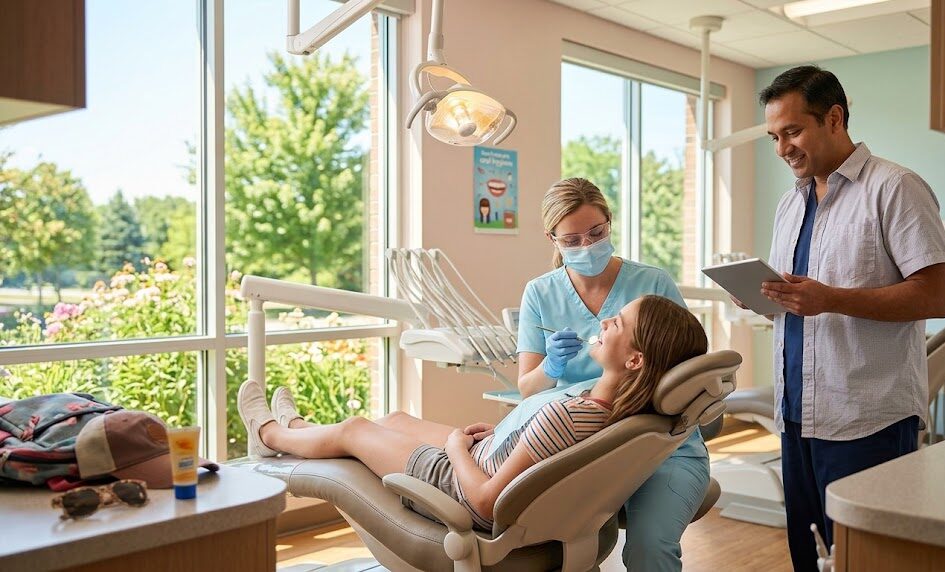
I know parents are already juggling camps, grandparents visiting, sports, work, and the annual mystery of where all the water bottles went. A summer dental cleaning is not about adding pressure. It is about using a flexible season to check in before school routines return.
Here is how I think about cleaning frequency for kids in Durango, what I check at the visit, and when it makes sense to call sooner.
- How often should kids get dental cleanings? The timing should be based on your child’s dental history, cavity risk, symptoms, age, and dentist’s recommendation.
- Is summer a good time? Yes, if your child is due or your fall calendar gets crowded.
- Do all siblings need the same schedule? Not always. Each child’s mouth and risk level can be different.
- What if my child has pain? Call before the planned cleaning. Symptoms change the timeline.
- What should parents ask? Ask about cavity risk, brushing spots, flossing, sealants, and travel tips.
How Often Should Kids Get Dental Cleanings?
The practical answer is: your child’s cleaning schedule should be based on their risk, history, age, and what the dentist sees at the exam. Many kids do well with routine visits on a regular schedule, but there is no single rule that fits every child.
That matters because two children can live in the same house and need different plans. One kid brushes like a tiny dental assistant and has wide spaces between teeth. Another has tight contacts, braces, dry mouth, deep molar grooves, and a snack drawer that looks like it was stocked by a raccoon with a debit card. Same family. Different mouths.
Lower Cavity Risk
A child with good home care, no recent cavities, and easy-to-clean teeth may stay on a routine preventive schedule.
Higher Cavity Risk
A child with recent cavities, deep molar grooves, braces, or frequent snacking may need closer monitoring.
New Teeth Coming In
Growing kids change quickly. New molars, loose teeth, and bite changes can shift the timing conversation.
Anxiety Matters Too
If your child is nervous, shorter, predictable visits can help dental care feel more normal.
MouthHealthy, the ADA’s patient education site, puts it well: there is no one-size-fits-all dental treatment schedule. Some people need one or two visits a year; others may need more, depending on their needs. That is the same basic thinking I use with children.
Why Can Summer Break Be a Good Time to Plan a Cleaning?
Summer break is not magic. Cavities do not check the school calendar. But summer can make scheduling easier for Durango families because you may have more room around school, homework, and after-school activities.
I also like summer visits because routines get a little wilder. Camps, river days, trail snacks, late nights, sleepovers, lemonade stands, road trips, and “I brushed at the hotel, probably” all have a way of sneaking into the season. A summer dental cleaning can reset the routine before fall starts pulling everyone in ten directions again.
- Your child is due for a preventive visit.
- You are trying to coordinate siblings on the same day.
- Your family has camps, travel, or sports coming up.
- Your child had cavities at the last visit.
- You want to ask about sealants before school routines return.
You can review dental cleanings and exams or the broader general and family dentistry page if you are planning visits for multiple family members.
What Does a Dentist Check at a Child’s Visit?
A cleaning is only one part of the visit. During children dental exams, I am looking at the whole pattern: teeth, gums, bite, plaque, food traps, brushing technique, new tooth eruption, and whether the child is showing signs of higher cavity risk.
If your child has not been in for a while, take a breath. Wherever you are starting, I start from here. No lectures. I would much rather help you build a workable plan than make you feel bad about a busy season of life.
| What I Check | Why It Matters | What You Learn |
|---|---|---|
| Plaque patterns | They show which areas are being missed at home. | Where your child needs help brushing or flossing. |
| Back molars | Grooves can trap food and plaque. | Whether sealants are worth discussing. |
| Between teeth | Cavities can start where toothbrush bristles do not reach. | Whether flossing needs to begin or improve. |
| Gum health | Bleeding or puffiness can point to plaque buildup or brushing issues. | How to adjust home care in a simple way. |
| Growth and bite | Kids are constantly changing. | Whether any development or spacing questions need follow-up. |
If I need more information, X-rays may be discussed based on your child’s history, age, symptoms, and risk. They are not a prize for showing up, and they are not automatic at every visit. They are used when they help answer questions I cannot answer just by looking.
What Cavity-Risk Factors Should Parents Mention?
Parents often think I only need to know if a tooth hurts. Pain matters, of course. But for preventive dentistry for kids, the small daily details can be just as helpful.
Recent cavities
If your child had a cavity recently, I want to know where it was and what changed afterward.
Snacking frequency
The number of snack moments often matters more than the size of one snack.
Sports drinks or juice
Sugary or acidic drinks can increase risk when they are sipped often.
Braces or appliances
Anything attached to teeth can make cleaning harder.
Mouth breathing or dry mouth
Less saliva can make teeth more vulnerable.
Family history
Some kids inherit tooth shape, spacing, or other factors that make prevention more important.
This is where a family dentist in Durango can be helpful. I know local rhythms: camps, mountain biking, ski season, school calendars, road trips, and families who drive in from across the Four Corners. The best cleaning schedule is the one that fits the actual child and the actual household.
How Can You Plan Around Camps and Travel?
If your child is due for a visit, try to schedule before the busiest part of the season. That gives you room to ask questions, talk through sealants, update home-care habits, or plan treatment if something needs attention.
If travel is already here, do not panic. Pack the basics: toothbrush, fluoride toothpaste, flossers if teeth touch, and a water bottle. If your child has a known issue, call before you leave and ask what signs would mean you should be seen. A clear plan makes travel feel calmer.
| Situation | Helpful Timing | Why It Helps |
|---|---|---|
| Camp starts soon | Schedule a cleaning if your child is due or has had recent issues. | You can ask about mouthguards, snacks, and brushing away from home. |
| Long road trip | Plan a checkup before travel when possible. | It is easier to answer questions before you are several towns away. |
| New adult molars | Ask about molars at the next cleaning. | Sealants may be discussed when molars have erupted enough to evaluate. |
| Fall sports ahead | Use summer to check teeth and ask about protection. | You can avoid stacking appointments during school restart. |
For questions about forms, appointment preparation, or what to bring, start with patient resources. If you are comparing preventive options, the full services page is also useful.
When Should You Call Sooner Than the Planned Cleaning?
A routine schedule is helpful, but symptoms change the plan. Call sooner if your child has tooth pain, swelling, a gum bump, a broken tooth, sensitivity that keeps returning, or food that gets stuck in the same place every time. That does not mean anything dramatic is guaranteed. It means I would rather look and give you a straight answer.
- Pain with chewing, cold, or sweets.
- Swelling, drainage, or a bump on the gums.
- A chipped, cracked, or broken tooth.
- A dark spot or visible hole.
- Food getting trapped in the same spot repeatedly.
- Bad breath that does not improve with brushing.
And if you are embarrassed because your child has missed visits, please hear this clearly: I am not keeping score. Parents are juggling work, school, weather, sports, family needs, and life. Wherever you have been, we start from here.
Where Do Sealants Fit Into a Cleaning Schedule?
Sealants are usually discussed during a cleaning and exam because I can see the molars clearly and evaluate cavity risk. If your child has deep grooves or new adult molars, I may recommend learning more about dental sealants.
Sealants do not replace routine visits. They are checked during routine visits. Think of them as one piece of the prevention plan, especially for kids whose back teeth are hard to keep clean.
What Source Guidance Supports This Approach?
For general home-care guidance, I look to the same basics reflected by MouthHealthy’s oral health recommendations and MouthHealthy’s healthy habits for babies and kids: brushing with fluoride toothpaste, cleaning between teeth, limiting frequent sugar exposure, and regular dental visits. For visit frequency, MouthHealthy’s common questions about going to the dentist emphasizes that dental schedules are not one-size-fits-all.