When Should Children Get Dental Sealants on Their Molars?
Children should usually be evaluated for dental sealants when permanent molars come in, often around the early elementary years and again around the early teen years. The right timing depends on tooth eruption, cavity risk, and whether the molar can be sealed properly.

Parents ask me this because they want to prevent cavities without overdoing dental treatment. That is a healthy instinct. Sealants can be useful for the right teeth at the right time, especially molars with deep grooves.
Here is exactly what happens when I check molars, how timing works, and how sealants fit into brushing, cleanings, snacks, and your family’s real life in Durango.
- When should children get dental sealants? Often when permanent molars come in and are ready to be sealed.
- Which teeth are usually sealed? Back molars, especially chewing surfaces with grooves that trap food.
- Does every child need sealants? No. The decision depends on tooth shape, cavity risk, eruption, and home-care patterns.
- Do sealants replace brushing? No. They are one prevention tool, not a substitute for brushing and flossing.
- What is the first step? Schedule a cleaning and exam so the dentist can check molar readiness.
What Teeth Do Sealants Usually Protect?
Sealants are most often used on the chewing surfaces of back teeth, especially molars. Those teeth have little grooves and valleys where food and plaque can settle. Even a motivated kid can miss those spots, because toothbrush bristles do not always reach deep into every groove.
That is the basic idea behind kids molar sealants. Sealants do not cover the whole tooth. They do not replace brushing. They are a preventive tool for the biting surfaces of teeth that are more likely to trap debris.
For Durango families, I usually bring up sealants during a cleaning and exam when I can actually see which molars are in, how deep the grooves are, and how your child is doing with home care.
First Permanent Molars
Often arrive around early elementary years and are common sealant discussion teeth.
Second Permanent Molars
Often arrive around the early teen years and may need their own timing conversation.
Deep Grooves
Grooves that trap food can make back teeth harder to keep clean.
Higher Cavity Risk
Past cavities, frequent snacking, or brushing struggles can make the discussion more important.
If you are looking for the service page, start with dental sealants or review general and family dentistry for broader family care.
Why Does Molar Timing Matter?
The timing question matters because a sealant works best on a tooth that has come in enough to stay dry and be properly coated. If a molar is only halfway through the gum tissue, it may not be ready. If it came in a while ago and already has a cavity, a sealant may no longer be the right solution for that area.
The CDC notes that first molars typically come in around age 6 and second molars around age 12, and that sealants are most effective when applied soon after adult molars come in. I treat that as a helpful general guide, not a rigid rule. Kids do not read eruption charts. Their teeth show up when they show up.
| Timing Clue | What May Be Happening | Parent Question |
|---|---|---|
| Around age 6 | First permanent molars may be coming in. | Ask whether the new molars are ready for sealants. |
| Around age 12 | Second permanent molars may be coming in. | Ask whether another sealant check makes sense. |
| Any age with deep grooves | Some baby teeth or adult teeth may trap food. | Ask whether sealants are appropriate for that specific tooth. |
| After a cavity history | Risk may be higher for future cavities. | Ask how sealants fit with cleanings, fluoride, and home care. |
How Does the Dentist Check If a Child Is Ready?
Here is exactly what happens. At a dental cleaning and exam, I look at which teeth are present, whether the molars are fully in, whether I can keep the tooth dry enough, whether there are early cavity signs, and how the grooves look. I also ask about snacks, brushing, flossing, fluoride, and any past cavities.
This is not about judging your child’s brushing or your parenting. No lectures. A sealant conversation is just a risk conversation. My job is to help you understand whether the tooth in front of me would benefit from an added layer of protection.
Tooth Eruption
The molar needs to be visible enough for the material to be placed properly.
Groove Shape
Some grooves are shallow and easy to clean. Others are narrow and sticky.
Cavity Check
If decay is already present, the plan may change.
Home Routine
Sealants work best alongside brushing, flossing, fluoride, and routine visits.
Comfort Level
If your child is nervous, we go step by step and explain what is happening.
What Does the Sealant Visit Feel Like for Kids?
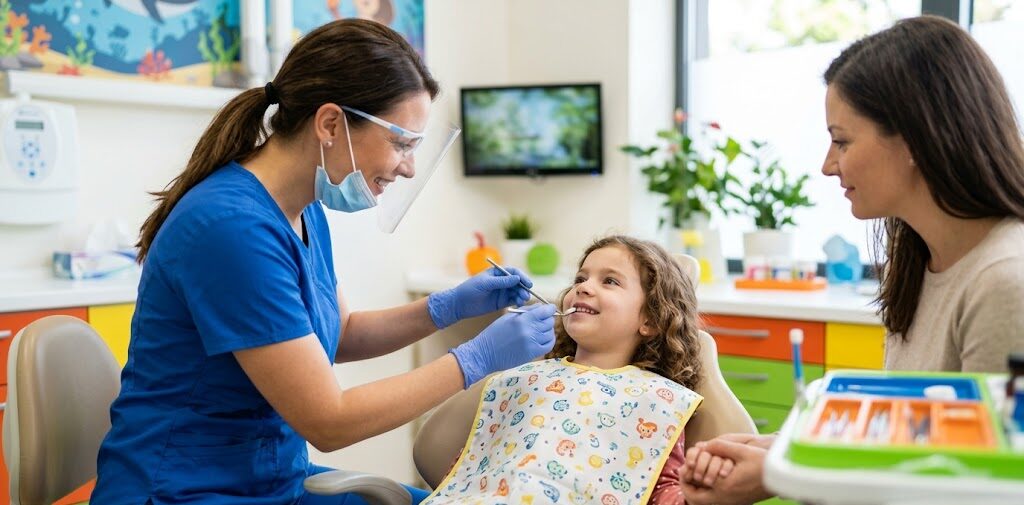
For many kids, sealants are one of the easier dental procedures to talk through because there is no drilling involved for a routine sealant placement. I still explain each step because kids do better when they know what is coming. Adults do too, honestly.
The tooth is cleaned, kept dry, prepared for the sealant material, coated, and then the material is set. Your child may need to keep the mouth open and tolerate cotton rolls, suction, or a small curing light. That is often the hardest part: staying still while everyone wants to go back outside.
- You can ask what each step is before it happens.
- The goal is to protect the grooves where food gets stuck.
- Sealants are checked at future visits.
- If something feels high or odd afterward, tell us.
- Your comfort matters. We go step by step.
How Do Sealants Fit With Brushing and Cleanings?
Sealants are not a free pass to ignore molars. They protect specific chewing grooves, but kids still need to brush the sides of teeth, clean near the gums, floss where teeth touch, drink water, and keep regular exams. Think of sealants as one piece of the prevention puzzle.
If your child keeps getting cavities, I want to look at the whole pattern: snack frequency, drinks, dry mouth, brushing technique, flossing, tooth spacing, fluoride, and family cavity history. Cavity prevention for children is rarely one thing. It is a bunch of small things working together.
Sealants
Help protect certain molar grooves.
Brushing
Cleans tooth surfaces, gums, and areas sealants do not cover.
Flossing
Cleans between teeth once teeth touch.
Cleanings & Exams
Let us check sealants, early cavity signs, and home-care patterns.
You can use patient resources before the visit if forms or logistics are the part that makes you sigh. We cater to cowards. Parents count too.
I used these official sources for general sealant timing and prevention direction. The right timing for your child depends on what is happening in their mouth today.