
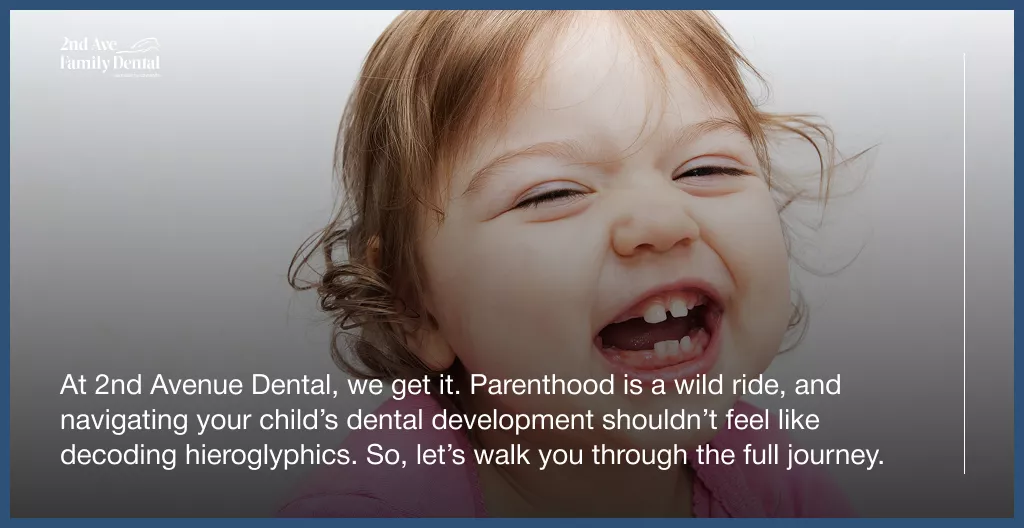
Let’s talk about teeth. Not yours, not mine—your kiddo’s. Those teeny, tiny baby teeth that peek through with a gummy grin and somehow make every parent reach for their phone to snap a picture. Whether you’re a brand-new parent or deep in the preschool trenches, chances are you’ve wondered: When do baby teeth come in? When should they fall out? Is that wiggly tooth normal, or not?
At 2nd Avenue Dental, we get it. Parenthood is a wild ride, and navigating your child’s dental development shouldn’t feel like decoding hieroglyphics. So, let’s walk you through the full journey, starting from the first tooth to the final baby tooth farewell—because informed parents raise healthy, confident kids. And healthy, confident kids? They start with a healthy, confident smile.
The Timeline: When to Expect Baby Teeth to Arrive
If you’ve been gazing into your baby’s gummy grin, waiting for that first sign of white, here’s what to expect:
First Tooth:
Most babies cut their first tooth around 6 months old, though anywhere between 4 and 12 months is totally within the range of “normal.” For some, it happens earlier; for others, a little later. It’s not a race.
Typically, the first to arrive are the lower central incisors—those bottom front teeth. Think of them as the opening act in the dental concert.
Order of Arrival:
Here’s the usual sequence:
- Lower central incisors – 6 to 10 months
- Upper central incisors – 8 to 12 months
- Upper lateral incisors – 9 to 13 months
- Lower lateral incisors – 10 to 16 months
- First molars – 13 to 19 months
- Canines (cuspids) – 16 to 22 months
- Second molars – 23 to 33 months
By the time your child hits age 3, they should have a full set of 20 primary teeth—ready to help them chew, speak, and smile their way through toddlerhood.
The Teething Phase: What to Expect and How to Help
Teething can feel like a rollercoaster—some kids breeze through it while others turn into drooly, cranky little cuddlebugs. Here are the signs and how you can help soothe the ride:
Signs of Teething:
- Excessive drooling
- Fussiness or irritability
- Trouble sleeping
- Chewing on fingers or toys
- Swollen or tender gums
- Decreased appetite
Comfort Tips:
- Gently massage their gums with a clean finger
- Offer chilled (not frozen) teething rings
- Use a cold, damp washcloth for chewing
- Wipe drool often to prevent rashes
- Extra cuddles—because let’s be real, that’s what they need most
Pro Tip: Avoid teething gels or tablets unless recommended by your pediatrician or family dentist. Some over-the-counter products may contain ingredients not safe for young children.
The Goodbye Stage: When Baby Teeth Begin to Fall Out
Just when you’ve gotten used to their adorable toothy grin, the wiggles begin. Most kids start losing their baby teeth between the ages of 6 and 7, starting with—you guessed it—the lower central incisors. It’s the circle of dental life.
The Usual Order of Departure:
- Lower central incisors
- Upper central incisors
- Lateral incisors
- First molars
- Canines
- Second molars
By around age 12 to 13, most kids will have lost all their baby teeth, making room for 28 permanent adult teeth (not including wisdom teeth, which show up later, if at all).
Is It Okay to Pull a Loose Tooth?
It’s tempting, we know. But the answer is: gently. If a baby tooth is very loose and hanging by a thread, it’s fine to help it along with a tissue and a gentle wiggle. But if there’s resistance or pain, let it be. Forcing a tooth out too early can lead to bleeding, infection, or damage to the underlying adult tooth.
What If a Tooth Won’t Fall Out?
Some baby teeth are a little clingy, even when the adult tooth is raring to go. This can result in a “shark tooth” where both teeth are visible. If this persists beyond a few weeks, it’s time to schedule a dental visit. A quick, painless removal might be necessary to avoid crowding or misalignment.
Common Concerns: When to See a Family Dentist
You don’t need to navigate these changes alone. Your child’s dental journey is unique, but some signs mean it’s time to bring in the pros.
See Your Dentist If:
- No teeth have erupted by 18 months
- Teething pain seems excessive or persists
- Baby teeth are falling out too early or too late
- Adult teeth appear misaligned or crowded
- Your child has difficulty chewing or speaking
- You notice prolonged thumb-sucking or pacifier use after age 3
At 2nd Avenue Dental, we’re here not just to treat, but to partner with you through every stage of your child’s development. From that first checkup to their teenage years and braces (we’ll cross that bridge when we get there), we’re on your team.
The First Dental Visit: Don’t Wait
Wondering when to schedule your child’s first dental visit? The American Academy of Pediatric Dentistry recommends seeing a dentist by age 1, or within 6 months of the first tooth erupting.
Yes, that early.
Why? Because it sets the tone. Early dental visits:
- Help your child get comfortable in the dental chair
- Let us monitor proper development and catch any red flags early
- Give parents personalized guidance on brushing, flossing, fluoride, and nutrition
- Start building healthy habits from the beginning
We make early visits fun, warm, and encouraging—no white-coat fear here. Our team knows how to talk to little ones in a way that turns dental care into something exciting.
Building Habits: A Quick-Start Guide to Home Care
Here’s what you can do every day to support your child’s oral health:
Infant to Toddler:
- Wipe gums with a soft cloth after feedings (before teeth emerge)
- Start brushing with a soft-bristled brush and a tiny smear of fluoride toothpaste when the first tooth appears
- Begin flossing once any two teeth touch
Ages 3 and Up:
- Use a pea-sized amount of fluoride toothpaste
- Brush together, twice a day, for two full minutes
- Supervise until at least age 6 to ensure thorough brushing
- Introduce flossing as a fun “big kid” activity
Consistency now pays dividends later. Your child might not understand plaque or cavities, but they understand routines—and they’ll follow your lead.
Final Thought: Confidence Starts With a Smile
At the end of the day, baby teeth matter more than many people realize. They hold space for adult teeth, support speech development, and allow children to chew and smile confidently. They’re the unsung heroes of childhood—and they deserve your care.
If you’ve got questions, concerns, or just want to be sure your child is right on track, we’re here. At 2nd Avenue Dental, we’re more than a family dental office—we’re your partners in parenting. We’ll help you navigate every stage with clarity, compassion, and maybe even a few laughs along the way.
Ready to Take the Next Step?
👶 Book your child’s first dental visit today—or schedule a checkup if you have concerns about tooth eruption or alignment. We’ll make sure you leave with answers, peace of mind, and a sticker or two.
📞 Schedule a Visit | 📍 Visit us in Durango, Colorado.
Disclaimer: This blog is for informational purposes only and is not medical advice. Please contact us to discuss the specifics of your situation.