
Can You Get a Crown and Implant on the Same Day
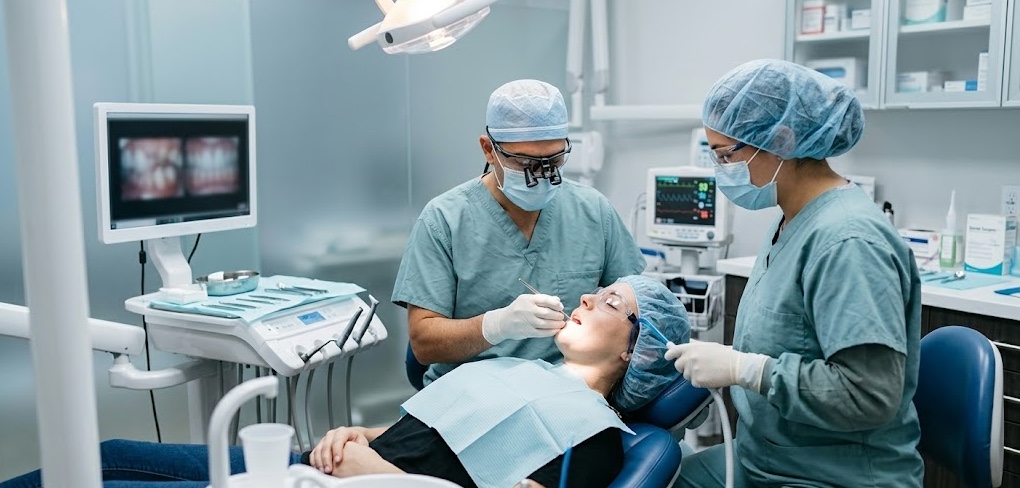
If a front tooth has to come out, one of the first questions is often not about the implant itself. It is: “Am I going to leave with a gap?”
Sometimes the answer is no. In carefully selected cases, a failing tooth can be removed, an implant placed and a temporary tooth provided during the same treatment period.
But “same-day crown and implant” can describe several different things, and that distinction matters.
You might be talking about placing an implant immediately after an extraction. You might mean attaching a temporary cosmetic tooth that same day. Or you might be imagining a final implant crown that you can immediately chew on like a fully healed tooth.
Those are not the same treatment.
At 2nd Ave Family Dental, the useful question is not simply, “Can we do it today?” It is, “Which parts can safely happen today, and which parts will be more predictable after healing?”
The Short Answer: Sometimes—but “Same Day” Usually Needs an Explanation
In appropriate cases, an implant may be placed at the same appointment as a tooth extraction and a temporary tooth may sometimes be provided immediately.
The permanent implant crown is commonly completed later, once the implant and surrounding tissues have healed enough for the final restoration.
Immediate Implant Placement
The failing tooth is removed and the implant is placed into the site during the same surgical appointment.
Immediate Provisional Tooth
A temporary crown or temporary tooth may be provided so you do not have to spend the healing period with a visible gap.
Immediate Loading
This refers to placing a restoration onto the implant very early in healing. How much biting force that restoration should receive is an important part of the treatment design.
Final Implant Crown
The definitive crown is commonly completed after healing and implant stability have been confirmed.
So when someone advertises a “tooth in a day,” ask what part of the treatment is actually final that day.
A Same-Day CEREC Crown Is Not the Same Thing as a Same-Day Implant Crown
This is especially important at 2nd Ave because patients may already have heard us talk about same-day crowns.
A same-day crown made for a natural tooth is a different treatment from a crown attached to a new dental implant.
| Same-Day Crown on a Natural Tooth | Same-Day Implant Treatment | |
|---|---|---|
| What supports it? | Your prepared natural tooth | A newly placed implant in healing bone |
| Why might it be completed quickly? | Digital design and in-office crown fabrication may allow the final restoration to be made in one visit | The implant may be stable enough for an immediate temporary restoration in selected cases |
| Is the restoration necessarily temporary? | No. A same-day CEREC crown may be the final crown | Often, the immediate tooth is provisional while the implant heals |
| What is still healing? | The natural tooth and surrounding tissues after preparation | The implant must integrate with the jawbone |
This distinction prevents a very understandable misunderstanding:
“If you can make crowns in one visit, why can’t my implant crown always be final on day one?”
Because implant healing is biological—not simply a question of how quickly a crown can be manufactured.
What Has to Go Right for an Immediate Implant Tooth to Make Sense?
Immediate implant treatment depends heavily on what the dentist or surgeon finds at the time of evaluation and placement.
Good Initial Implant Stability
The implant needs enough mechanical stability in the bone to support the planned healing approach.
Enough Usable Bone
The site needs sufficient bone in the right locations to stabilize the implant. If bone is missing, grafting may change the plan.
Healthy, Manageable Soft Tissue
The condition and shape of the gums affect both healing and the appearance of a front-tooth implant.
A Bite We Can Protect
Clenching, grinding or heavy contact on a new temporary tooth can add unwanted force during early healing.
A Site That Can Be Cleaned and Managed Predictably
The condition of the socket, surrounding tissue and any infection must be evaluated rather than assumed.
A Patient Who Can Follow the Healing Plan
Diet changes, hygiene instructions, follow-up visits and avoiding tobacco can all matter during early implant healing.
Does an Infected Tooth Automatically Rule Out a Same-Day Implant?
No—not automatically.
This is one place where the old version of this article was too simple.
A tooth may need extraction because of infection, but the presence of infection does not by itself answer whether immediate implant placement is possible.
The clinician has to evaluate:
how much bone remains;
the extent and location of the infection;
whether the site can be thoroughly cleaned;
whether the implant can achieve adequate stability;
and whether grafting or staged healing would give a more predictable result.
That is why treatment is planned from the actual tooth and socket—not from a blanket rule.
A Front Tooth and a Back Molar Are Different Same-Day Decisions
The location of the tooth matters.
Front Teeth
When a visible front tooth fails, avoiding a noticeable gap during healing can be a major concern.
In favorable cases, immediate placement with a carefully designed provisional tooth can help maintain appearance and support the surrounding gum contours while the implant heals.
The temporary restoration may be intentionally adjusted so it receives little or no direct biting pressure.
Back Teeth
Molars experience substantial chewing force.
That does not mean immediate treatment is impossible, but loading and restoration decisions can be different because the implant is being asked to function in a much higher-force area.
This is another reason why the phrase “same-day implant” tells you much less than it sounds like it does.
What Does the Process Actually Look Like?
Start With the Tooth, Bone and Bite
The dental team evaluates why the tooth is failing, the available bone, gum condition, neighboring teeth, bite forces and medical history.
Decide Whether Surgery Should Be Immediate or Staged
Some teeth can be removed and replaced with an implant during the same surgical visit. Other sites are better allowed to heal or be grafted first.
Place the Implant When Conditions Allow
If immediate placement is appropriate, the implant is positioned and its stability assessed.
Decide Whether a Same-Day Tooth Is Appropriate
If stability, bite and tissue conditions are favorable, a provisional tooth may sometimes be used during healing.
Protect the Healing Implant
You may be given modified eating and cleaning instructions even though the site looks like it already has a tooth again.
Complete the Final Restoration After Healing
Once implant integration, tissues and bite are appropriate, the definitive crown can be planned and completed.
Will Every Part of Implant Treatment Happen at the Same Office?
Not necessarily—and that is not a bad thing.
Dental implant treatment can involve both surgical and restorative phases.
Depending on the complexity of the case, a general dentist may evaluate the tooth, discuss replacement options and plan the final restoration while an oral surgeon or another surgical provider handles extraction, grafting or implant placement.
The patient then returns to the restorative dentist for the final crown and ongoing maintenance.
For you, the important thing is not whether every step happens in the same room.
It is whether the providers are working from the same plan.
Who is handling the extraction?
Who is placing the implant?
Who is making the temporary tooth?
Who is making the final crown?
Who should I call during healing if something feels wrong?
Those are practical questions to have answered before treatment starts.
If You Need a Bone Graft, Does That End the Same-Day Conversation?
Not necessarily.
“Bone graft” can describe different amounts and types of site development.
Some grafting can happen at the time of extraction or implant placement. Other cases require the graft to heal before an implant can be placed predictably.
The deciding issue is not simply whether graft material is involved.
It is whether enough stable bone exists to place the implant appropriately and whether the surgical site can support the planned immediate approach.
If you are told you need grafting, ask:
Why Do I Need the Graft?
Is the goal width, height, socket preservation or repairing a specific defect?
Can the Implant Still Be Placed at the Same Visit?
Sometimes yes; sometimes healing first creates the safer foundation.
Does the Graft Change My Temporary Tooth?
The restoration plan may need to protect the site differently during healing.
How Does It Change the Timeline?
Ask what treatment can still happen now and what has to wait.
If You Leave With a Tooth, Can You Eat Normally That Night?
This is one of the easiest ways to misunderstand “same day.”
A provisional tooth can look surprisingly complete from the outside while the implant underneath is still at the beginning of healing.
That temporary restoration is not necessarily permission to bite into whatever you want.
Depending on the case, you may be told to:
choose softer foods;
avoid chewing directly on the implant site;
avoid hard or sticky foods;
keep the area gently clean according to your instructions;
and return for scheduled healing checks.
The temporary tooth may look finished before the biology is finished.
That is an important sentence to remember.
A Durango Planning Note: “Same-Day Tooth” Does Not Mean Same-Day Normal Schedule
The convenience of leaving without a visible gap can matter a lot—especially if the tooth is in the front of your smile.
But surgery day is still surgery day.
If you are trying to coordinate treatment around work, travel, family commitments or a weekend outside, ask about the recovery portion too.
A temporary tooth may allow you to smile and speak without an obvious missing tooth, but you may still need to modify:
Exercise
Heavy workouts and strenuous recreation may need to wait while early bleeding and swelling settle.
Eating
The temporary tooth may need protection from direct or heavy chewing.
Travel
Know when the first follow-up is expected before scheduling a long trip away from your dental team.
Work
Many patients can resume normal desk-based routines fairly quickly, but soreness and swelling still vary by procedure.
A faster restorative timeline can reduce inconvenience, but it does not remove the healing phase.
Questions Worth Asking Before You Choose a Same-Day Implant Plan
Instead of focusing only on “Can you do it today?”, bring these questions to the consultation.
| Question | Why It Matters |
|---|---|
| Am I getting a temporary tooth or the final crown? | “Same day” can mean very different things depending on the restoration. |
| Will the temporary tooth touch when I bite? | Some provisional restorations are intentionally protected from normal biting forces during healing. |
| What about my bone and gum condition makes me a good candidate? | This tells you whether the plan is based on anatomy and biology rather than convenience alone. |
| Would waiting improve predictability? | Sometimes staging the treatment creates a better foundation for the final result. |
| Do I need grafting? | Grafting can change both the timing and surgical sequence. |
| Who is doing each phase? | Implant treatment may involve coordinated surgical and restorative providers. |
| When can I chew normally? | A same-day tooth is not automatically a fully loaded tooth. |
| When is the final crown planned? | This gives you a realistic picture of the complete treatment timeline. |
Same-Day Crown and Implant FAQs
Can an implant and crown really be done on the same day?
In selected cases, an implant can be placed and a temporary crown or temporary tooth provided during the same treatment period. The final implant crown is commonly completed later after healing.
Can my failing tooth be extracted and the implant placed immediately?
Sometimes. The socket, remaining bone, gum tissue, infection, implant stability and other clinical factors all need to be evaluated.
Is an immediate implant the same thing as immediate loading?
No. Immediate placement refers to when the implant is surgically placed. Immediate loading refers to when a restoration is connected and begins receiving functional forces early in healing.
Does an infection mean I have to wait?
Not automatically. The extent of infection, available bone, ability to clean the site and likelihood of achieving implant stability all affect the decision.
Will the crown I leave with be permanent?
Often it is a provisional restoration designed for the healing period. Ask your dentist specifically whether the same-day tooth is temporary or definitive.
Can I chew normally on a same-day implant tooth?
Not necessarily. Many immediate restorations need to be protected from heavy biting while the implant integrates with the bone.
How long does implant healing take?
The bone-integration phase generally takes several months, but the actual timeline varies with the site, treatment plan, grafting, general health and individual healing.
Will I have to go without a front tooth during healing?
Often there are temporary tooth-replacement options available, even when an immediate crown cannot safely be attached to the implant itself.
Does bone grafting mean I cannot have an immediate implant?
No universal rule applies. Some grafting can occur with implant placement, while other defects are better treated and allowed to heal first.
Is the fastest implant plan always the best one?
No. The best plan is the one that provides a healthy, stable foundation for the final tooth. Sometimes that is immediate treatment. Sometimes it is staged treatment.
What You Should Take Away From This
“Same-day implant” does not have one definition. Ask whether the conversation is about extraction timing, implant placement, a provisional tooth or true immediate loading.
The tooth you leave with may be temporary. The final implant crown is commonly completed after the implant and surrounding tissues heal.
Front and back teeth create different challenges. Bite forces and aesthetic needs affect the plan.
Bone grafting does not automatically mean “no.” It does mean the site needs a more specific surgical assessment.
A same-day tooth is not same-day healing. The implant still needs time and protection while it integrates with the bone.
Coordinated care is normal. The surgeon and restorative dentist may handle different stages of the same implant plan.
Clinical Context for This Guide
This article was updated using current implant-treatment guidance and consensus literature, including information from the International Team for Implantology, the American Academy of Periodontology and Cleveland Clinic.
Current evidence supports immediate implant placement and immediate provisionalization in carefully selected patients. It also makes clear that case selection, implant stability, bone and soft-tissue conditions, restoration design and bite forces all matter.
That is why this article avoids promising that every patient can leave with a fully functioning final implant crown in one visit.
Trying to Replace a Tooth Without Spending Months With a Gap?
Start with that question.
Maybe the tooth is cracked. Maybe an old crown or root canal is failing. Maybe it is a front tooth and you are worried about what you will look like during healing.
You do not need to decide whether you need immediate placement, grafting or a temporary implant crown before contacting us.
We can help you understand the restorative plan, what may need surgical coordination and what temporary-tooth options can keep the process manageable.
2nd Ave Family Dental
835 E 2nd Ave
Durango, CO 81301
(970) 247-4848
Reviewed by Dr. Taylor M. Clark
This patient guide has been reviewed for clinical accuracy by Dr. Taylor M. Clark of 2nd Ave Family Dental in Durango, Colorado. Dr. Clark earned his dental degree from the University of North Carolina at Chapel Hill, served with the Indian Health Service in Whiteriver, Arizona, and later completed two years of advanced anesthesiology training at UCLA.