
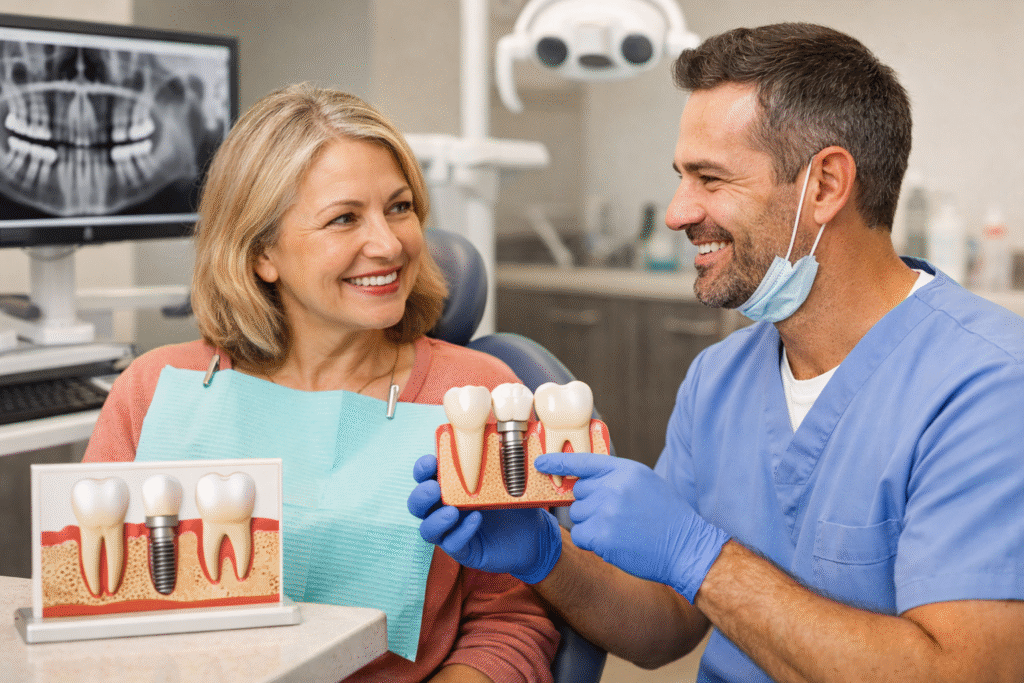
Dental implants are designed to be a long-term solution for missing teeth, and many can last for decades. The key is understanding what “the implant” includes, what typically wears out first, and how to protect your investment with the right home care and maintenance visits.
At 2nd Ave Family Dental, we keep implant planning simple and patient-focused. We look at your bone support, bite forces, gum health, and daily habits so your implant has the best chance to stay stable, comfortable, and easy to care for.
Explore related services: Restorative Dentistry, Dental Crowns, Dental Cleanings & Exams, General & Family Dentistry, Contact.
The Short Answer: The Implant Post Can Last a Very Long Time, and the Crown May Need Replacement Sooner
When people ask, “How long do dental implants last?”, they are usually talking about the whole tooth replacement. But an implant restoration has multiple parts, and they can age differently.
The implant (the post)
This is the part placed in the jawbone. With good healing and long-term maintenance, it can last for decades and sometimes for life.
The crown (the visible tooth)
This is the part you chew on. Like natural teeth, it can wear over time and may need replacement after years of use.
Gums and bone matter
Implants rely on healthy tissue support. Keeping gums stable is a major factor in long-term success.
Daily care is everything
Brushing, flossing, and regular checkups help prevent inflammation around implants that can shorten lifespan.
What this means for you
A well-planned implant plus consistent maintenance is the best recipe for long-term performance.
If you want a realistic expectation, the most honest answer is: implants are built for the long haul, but long-term success depends on the foundation, the bite, and how well the implant is maintained over time.
Watch: Dental Implant Life Expectancy (Plain-English Explanation)
This video answers the core question directly and explains why implants can last a long time, and what factors affect real-world longevity.
As you watch, listen for the difference between the implant itself and the restoration on top. That one detail clears up a lot of confusion for patients.
What “Implant Lifespan” Really Means
A dental implant is not a single piece. It is a system. Most people picture the “tooth” part, but your long-term results depend on what is happening under the gumline.
Implant fixture (in the bone): This is the anchor. It is designed to integrate with bone and stay stable long-term.
Abutment (the connector): This joins the implant to the crown. It needs a precise fit and healthy gum tissue around it.
Crown, bridge, or denture (the chewing surface): This takes the daily wear. It can chip, loosen, or wear down over time, just like natural teeth.
So when you hear “implants can last decades,” that usually refers to the implant fixture. The crown on top may need maintenance or replacement earlier depending on your bite, grinding, and overall use.
Watch: Typical Implant Lifespan and What Makes Them Last
This reel explains a realistic range many patients hear (often 10 to 30 years, sometimes longer) and highlights the biggest drivers of longevity: hygiene, gum health, and follow-up care.
We like this message because it is honest. Implants are durable, but they are not “set it and forget it.” The goal is to make them easy to maintain for the long run.
Implant Success Rates and Why the Details Matter
You will often hear that implants have high success rates. That is true in many cases, but it helps to know what “success” means clinically.
Short-term success
Healing goes well and the implant integrates with bone without infection or major complications.
Long-term success
The implant stays stable over time, with healthy bone levels and manageable gum tissue around it.
Maintenance success
The implant stays cleanable and comfortable, and the bite forces are controlled so parts do not loosen or fracture.
Patient factors
Smoking, uncontrolled gum disease, poor oral hygiene, and heavy grinding can increase risk over time.
The best way to translate “success rate” into something practical is this: good planning plus consistent maintenance usually leads to strong long-term outcomes.
Watch: What Is the Success Rate for Dental Implants?
This video breaks down implant success in plain terms and explains why your health, habits, and ongoing care plan matter just as much as the procedure itself.
When you hear a percentage, the next question is: “What can I do to be on the successful side of that number?” That is where hygiene, gum care, and bite management come in.
What Helps Dental Implants Last Longer
Implants tend to last longer when the foundation is solid, the bite forces are balanced, and the implant stays clean. These are the most common “longevity levers” we talk through with patients.
Healthy gums: Gum inflammation around implants can progress silently. Regular exams help catch early changes before they become bigger problems.
Consistent home hygiene: Brushing and cleaning between teeth and around the implant helps prevent plaque buildup at the gumline.
Routine professional maintenance: Cleanings and periodic checks confirm the implant stays stable and the restoration remains well-fitted.
Bite and grinding control: Heavy forces can loosen components or damage the crown. A night guard may be recommended for grinders.
Put simply: implants last longer when they stay clean and stable, and when the chewing forces on them are reasonable and well-distributed.
Watch: Realistic Long-Term Implant Outcomes
This reel reinforces the big picture: many implants can do very well long-term, especially when patients keep up with maintenance and gum health.
We like to set expectations the same way: plan well, heal well, then protect it with a simple routine that is sustainable.
How to Care for Dental Implants Day-to-Day
Implants can be easier to live with than removable options, but they still need daily cleaning. The goal is to keep plaque off the gumline and clean around the restoration so the tissue stays healthy.
Brush twice daily
Use a soft-bristled toothbrush and pay attention to the gumline around the implant.
Clean between teeth
Floss, interdental brushes, or a water flosser can help remove plaque where a toothbrush cannot reach.
Keep maintenance visits
Professional cleanings and checks help catch small issues early and protect long-term outcomes.
Protect against grinding
If you clench or grind, ask about a night guard to reduce stress on the implant crown and components.
If you have an implant bridge or an implant-supported denture, we will show you exactly how to clean under and around it using the right tools for your specific design.
Watch: How to Care for Your Dental Implants
This video covers practical cleaning tips and what to watch for at home so your implant stays healthy and comfortable.
The biggest takeaway: implants need the same consistency as natural teeth. Clean them daily, and treat gum inflammation as a real warning sign, not something to ignore.
Watch: Implants Can Function Like Natural Teeth for Decades
This reel highlights an encouraging truth: with good habits and healthy gums, implants can feel and function like natural teeth for a very long time.
That is the goal. We want an implant that is stable, cleanable, and comfortable, and a maintenance plan that is realistic for your life.
Warning Signs an Implant Needs Attention
Most implant issues are easier to solve when caught early. If you notice any of the symptoms below, it is worth getting checked.
Bleeding when brushing: This can be a sign of inflammation around the implant.
Swollen or tender gums: Healthy tissue around an implant should not feel sore or puffy.
Bad taste or drainage: These can point to infection or trapped debris under a restoration.
Looseness or bite changes: An implant crown should not wiggle. A “high bite” feeling can also be a red flag.
If you are unsure, that is okay. A quick exam can usually tell us whether it is a simple cleaning issue, a bite adjustment, or something that needs more focused care.
Quick Guide: How Implants Compare to Other Tooth-Replacement Options
This table compares common ways to replace missing teeth. Implants are popular because they can be stable and long-lasting, but the best option depends on your health, timeline, and goals.
| Option | Best for | Typical tradeoff | Maintenance focus |
|---|---|---|---|
| Dental implant + crown | Replacing one missing tooth without relying on neighboring teeth | Requires surgery and healing time | Daily hygiene, gum health checks, crown maintenance |
| Dental bridge | Replacing a missing tooth when adjacent teeth need crowns anyway | Relies on neighboring teeth for support | Cleaning under the bridge, gum and crown monitoring |
| Partial denture | Replacing multiple missing teeth with a removable option | Removable and may feel bulkier | Daily removal and cleaning, fit checks over time |
| Full denture | Replacing all teeth in an arch with a removable appliance | Can be less stable without implant support | Cleaning, relines as gums change, sore spot adjustments |
If you tell us your goals and budget range, we can walk through options in plain English and help you choose a path that feels confident and realistic.
Step-by-Step: How We Plan for Long-Lasting Implant Results
Implant treatment should feel calm and predictable. Here is the simple approach we use to support long-term success and patient comfort.
Start with a full-mouth health check
We evaluate gums, bone support, bite forces, and any existing decay or infection so the foundation is stable.
Confirm candidacy and timeline
We discuss healing time, bone needs, and the best sequence for predictable results.
Place or coordinate implant care
We plan carefully for placement, comfort, and long-term cleanability of the final restoration.
Restore function and aesthetics
We place the crown, bridge, or denture once healing is complete and the implant is stable.
Protect the investment with maintenance
We set a simple recall and home-care plan to keep gums healthy and catch issues early.
Want to explore restorative options? Visit our Restorative Dentistry page.
What You Should Take Away From This
Dental implants can be an excellent long-term solution, especially when planned carefully and maintained consistently. The best outcomes come from protecting gum health and keeping the restoration clean and stable.
The implant post is built for the long haul. With good bone support and maintenance, it can last for decades.
The crown may need maintenance over time. It is the chewing surface and can wear like natural teeth.
Gum health is a major longevity factor. Bleeding or swelling around an implant is worth checking early.
Daily cleaning plus checkups protects results. The simplest routines are often the most effective.
Want a Clear Answer About Implant Longevity for Your Situation?
If you are considering dental implants, we can help you understand what to expect in your specific case. We will review your gums, bone support, bite, and overall oral health, then explain your options in plain English.
If implants are a great fit, we will guide you through a comfortable plan designed for long-term stability. If another option makes more sense, we will walk you through that path too.
Schedule an Implant Consultation