
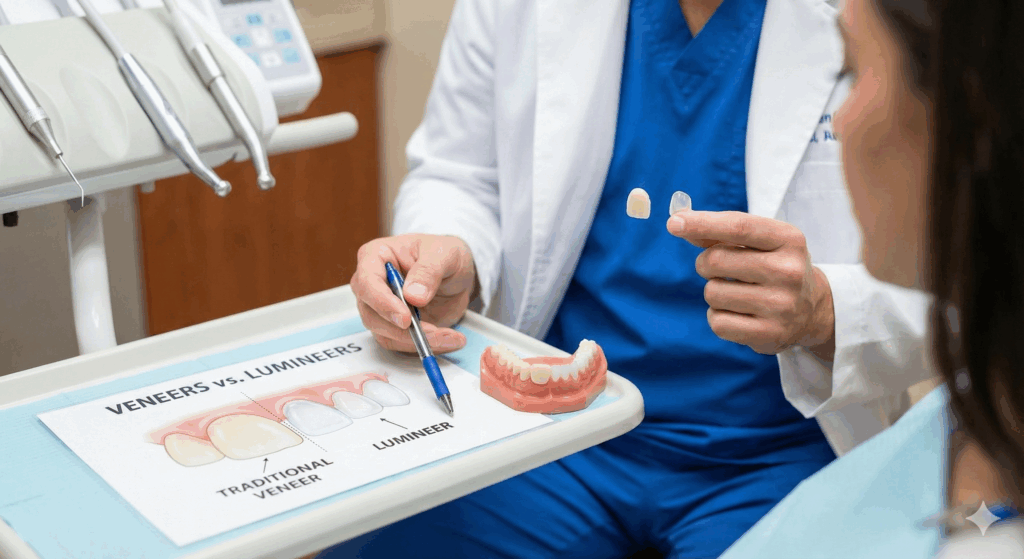
Veneers and Lumineers can both improve the look of your smile. The difference is not just the name. It is about thickness, tooth preparation, and how much the material can truly change color and shape.
At 2nd Ave Family Dental in Durango, our approach is prevention-first and patient-centered. We keep things comfortable, protect healthy enamel whenever possible, and recommend what is most predictable for your bite and your goals.
Start here if you want the service page: Dental Veneers. For the full cosmetic category, see: Cosmetic Dentistry. If you want a personalized plan, contact us here: Contact.
Veneers vs Lumineers in Plain English
Both veneers and Lumineers are thin coverings bonded to the front of a tooth to improve how it looks. They can help with chips, uneven edges, small gaps, mild crowding, and discoloration that whitening cannot fully fix.
Traditional veneers: Custom shells (often porcelain) designed to improve color and shape. They commonly require some enamel reshaping so the final result looks natural and sits flush.
Lumineers: A brand of ultra-thin veneer. In some cases, they can be placed with little-to-no tooth reduction, but that depends on your tooth position, enamel, and the look you want.
The real goal: A natural-looking result that feels comfortable when you bite, and that you can maintain long-term.
If you are deciding between the two, an exam is the right first step. We evaluate enamel, gums, and bite forces so the recommendation is based on what will hold up in real life.
Watch: Veneers vs Lumineers (Quick Overview)
This video gives a straightforward overview of how dentists think about veneers vs Lumineers, including why case selection matters more than marketing terms.
As you watch, focus on the “why”: thickness, prep, and coverage are all tools. The best plan uses the right tool for your specific starting point.
The Key Differences (What Patients Usually Care About Most)
If you want a fast, practical comparison, this table covers the differences that most directly affect your final look and long-term comfort.
| Topic | Traditional veneers | Lumineers | Why it matters |
|---|---|---|---|
| Thickness | Thin, but typically thicker than Lumineers | Ultra-thin | Thickness can help with stain masking and shape changes, but it must still look natural. |
| Tooth prep | Often requires some enamel reshaping | May require little-to-no reshaping in some cases | Prep often helps restorations sit flush so they do not look bulky near the gumline. |
| Masking dark stains | Often better for deep discoloration | May not hide very dark stains as well | If shade change is a top goal, coverage can be the deciding factor. |
| Degree of transformation | Can be more dramatic (shape, length, symmetry) | Often more subtle | Some smiles need stronger correction. Others only need light refinement. |
| Bite and durability | Predictable when planned for bite forces | Depends heavily on bite and case selection | Grinding and heavy bite forces can chip edges for any veneer type without proper planning. |
| What people call “reversible” | Often less reversible due to enamel reshaping | Sometimes marketed as reversible | In real life, the safest plan is “conservative and predictable,” not just “reversible.” |
Bottom line: both can be great. The best option depends on your enamel, your bite, and how much change you want to see.
Quick Watch: Thinness, Tooth Shaving, and Stain Coverage
This reel explains why Lumineers are much thinner than regular veneers, why that can reduce tooth prep in some cases, and why very dark stains may still show through with ultra-thin materials.
If your main goal is a whiter smile, we may also talk about whitening first, then deciding whether veneers are still needed for shape or coverage. Learn more here: Cosmetic Dentistry.
When Traditional Veneers Are Often the Better Fit
Traditional veneers can be the stronger option when you need more control over color and shape, or when we want a more predictable fit with your bite.
Deep stains or uneven color
If discoloration is dark or patchy, traditional veneers often provide better masking and a more consistent final shade.
More shape correction
If you want to change tooth length, symmetry, or close larger gaps, added control can help the result look natural.
Bite forces and edge protection
If your bite puts heavy force on front teeth, careful planning and bite adjustment can reduce chipping risk.
Preventing a bulky look
Conservative prep often helps veneers sit flush so they do not look too thick near the gumline.
Many patients hear “prep” and assume it is a negative. In reality, prep is often what makes the final result look more natural and feel more comfortable.
Watch: What “No-Prep” Really Means (And When It Makes Sense)
This video breaks down the idea of “no-prep” Lumineers and why some smiles are good candidates, while others need a small amount of reshaping for a natural, predictable result.
The best takeaway: a “minimal” approach should still look natural. If ultra-thin material adds bulk or changes your bite, it is not the right plan.
When Lumineers May Be a Good Fit
Lumineers can be a good option when your teeth already have a solid baseline shape and color, and you want a conservative, subtle upgrade.
Subtle refinements
Minor chips, slight unevenness, or small spacing may be improved with an ultra-thin option in the right case.
Minimal prep goals
If your enamel and tooth position allow it, prep can sometimes be minimal. This is determined in the exam.
Natural look preference
If you want your smile to look like “you, just cleaner and more even,” Lumineers may be worth discussing.
Case selection matters most
Lumineers are not automatically better. The best choice is the one that matches your bite and your goals.
If your goals are minor and your teeth are healthy, we may also discuss bonding as a simpler alternative for small changes. Learn more here: Dental Bonding.
Watch: A Dentist Compares Lumineers vs Veneers (Pros and Cons)
This reel lays out advantages and disadvantages of each option in plain language. It is helpful if you are deciding between “minimal prep” and “stronger coverage and control.”
If you are leaning one way, bring a photo or a short note about what you want to change. That makes the consult faster and more useful.
Step-by-Step: How Veneers or Lumineers Are Planned
Cosmetic dentistry should feel clear, not salesy. Here is the typical process so you know what to expect from start to finish.
Exam, photos, and bite evaluation
We evaluate teeth, gums, enamel, and bite forces. This helps us recommend what will look good and hold up.
Goal-setting in plain English
We align on your priorities: whiter teeth, symmetry, closed gaps, smoother edges, or a subtle refresh.
Prep only if needed
If prep is recommended, it is conservative. The goal is a natural look and a comfortable bite, not removing more enamel than necessary.
Final placement and bite check
We bond the restorations and confirm they feel right when you bite, speak, and smile.
Long-term protection plan
We review care habits and discuss grinding, clenching, or edge-to-edge bite issues that can shorten lifespan.
Before cosmetic work, it helps to have a strong foundation. If you are due for prevention, start here: Dental Cleanings and Exams.
Watch: Veneer vs Lumineer Differences (Simple Explanation)
This video gives another clear explanation of how veneers and Lumineers differ, with a focus on practical decision points patients care about.
If you are unsure what applies to you, that is normal. A consult makes the decision simpler because we can match the option to your enamel, bite, and shade goals.
Quick Look: Dramatic Veneer Transformations vs Minimal Changes
This reel highlights a common decision point: traditional veneers can create dramatic transformations, while Lumineers tend to be a more minimal option. Seeing that contrast can help you decide what you really want.
If your goal is “natural but improved,” that is a great target. We can plan toward that without overdoing it.
Common Questions Patients Ask
These are the questions we hear most often. If you have a specific concern, bring it up. The best consult is one where you leave with clarity.
Will it hurt?
Most patients do fine. If prep is needed, we keep you comfortable and talk you through each step so nothing feels surprising.
Do veneers stain?
Veneer materials resist staining better than natural enamel, but the gumline still needs good hygiene for long-term appearance.
Should I whiten first?
Often, yes. Whitening can help brighten surrounding teeth so the final shade match looks more natural.
Are Lumineers always no-prep?
No. Some smiles still need light reshaping so the result looks natural and your bite stays comfortable.
What if I grind my teeth?
Grinding and clenching are common and can increase chipping risk. We may recommend a protective guard depending on your bite and habits.
If you want to talk through options, reach out here: Contact the Office.
What You Should Take Away From This
“Veneers vs Lumineers” is not a one-size-fits-all decision. The best choice is the one that fits your enamel, your bite, and your goals.
Lumineers are a brand of veneer. The term usually signals ultra-thin material and potentially less prep, but case selection matters.
Traditional veneers can be more predictable for big changes. They often mask deeper stains better and allow more shape control.
Natural look and comfort come first. A good plan avoids bulk and protects your bite long-term.
A consult simplifies everything. We can tell you quickly what is realistic based on your teeth and goals.
Ready to Choose the Right Option for Your Smile?
If you are deciding between veneers and Lumineers, the easiest next step is a consultation. We will evaluate your enamel, your bite, and your goals, then walk you through the best options in plain English.
The goal is a natural-looking result you feel confident in, plus a care plan that helps it last.
Schedule a Veneers Consultation