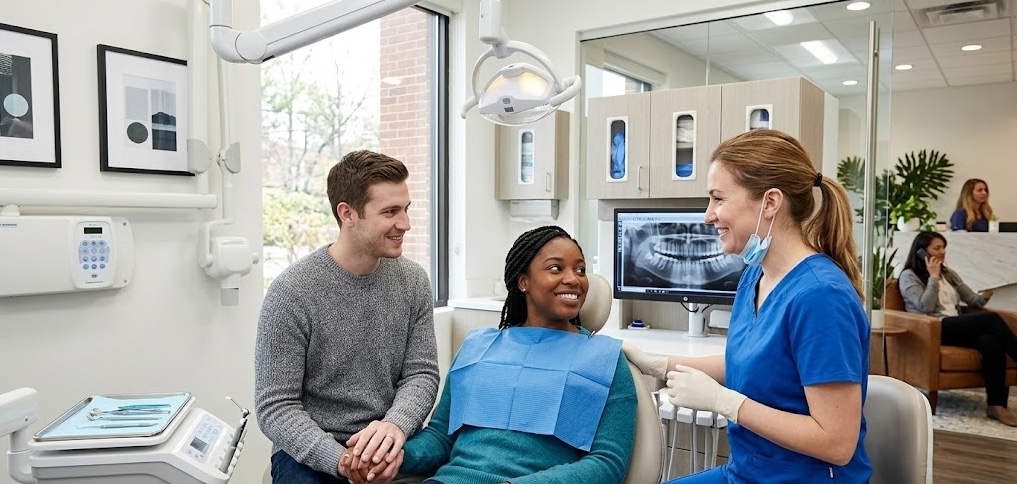
Start with the fear, not the procedure
What if the hardest part of dental care is making the first call?If fear has kept you from calling a dentist in Durango, the first conversation should not begin with a lecture or a demand that you choose a procedure. It should begin with what you are afraid of. Dental nervousness, anxiety, and phobia can feel different, but none of those experiences disqualifies you from asking for help. Sedation options may become part of the plan; they are not a test you have to pass before you contact us.
Your first job is simply to name the concern. “I’m nervous” is enough. From there, I can ask what makes dental visits hard, explain what the first visit could look like, and talk through comfort before treatment decisions.
I’m Dr. Taylor Clark at 2nd Ave Family Dental. If you have been researching dental anxiety vs. dental phobia and sedation dentistry late at night, you may be hoping to find the exact label that proves your fear is serious enough. You do not need to prove it to me. You also do not need to apologize for how long it has been, how nervous you feel, or how little you can say on the phone.
Real talk: some people are more afraid of being judged than they are of the chair. They imagine someone looking at their teeth and asking why they waited. That question does not move care forward. Wherever you are starting, we start from here. No lectures.
This article cannot diagnose a dental phobia or decide whether oral sedation, IV sedation, or another approach fits you. What it can do is make the first conversation less mysterious. I want you to know which questions matter, what information helps, and why comfort planning begins before medication enters the picture.
Anxious? Good—we specialize in that conversation. You can call before you know what treatment you need. You can ask for a consultation focused on comfort. You can also ask us to explain one step at a time.
If fear is the reason you have not called, where do we start?
We start with the smallest truthful sentence you can manage. Maybe it is “I haven’t been in years.” Maybe it is “I had a bad experience.” Maybe it is “I do not want to know what you will find.” Maybe you can only say, “I’m nervous.” Every one of those sentences gives me useful information.
You do not have to tell your entire dental history to the first person who answers the phone. You can say that anxiety is part of the reason for your call and ask how the office handles a nervous first visit. The American Dental Association encourages patients to mention anxiety when booking, ask questions, and agree on a signal if they need a break. Those are practical starting points, not signs that you are being difficult.
The goal of that first exchange is not to force confidence. It is to create enough safety for the next step. Sometimes the next step is an exam. Sometimes it is a conversation about what an exam would involve. Sometimes it is gathering health information so sedation can be discussed responsibly. You are allowed to take this step by step.
It can help to separate four fears that often arrive as one large feeling:
You may worry that someone will criticize the gap in care, the condition of your teeth, or choices you made while you were avoiding appointments.
You may be thinking about a previous experience, sensitivity, needles, sounds, or not knowing how you will respond during the visit.
You may want to know whether you can pause, ask what is happening, sit up, or change the pace of the conversation.
You may be imagining surprise findings, an unexpected treatment plan, or being asked to decide before you understand your options.
These concerns can overlap. You do not need to sort them perfectly. I ask about them because a person who fears judgment may need a different first conversation from someone whose main trigger is sound or loss of control. The tooth matters, but the way we get to the tooth matters too.
What is the difference between nervousness, dental anxiety, and dental phobia?
In everyday conversation, people use these words interchangeably. That is understandable. They all describe distress connected to dental care, and they can sit on a spectrum. The differences are less about finding the correct internet label and more about understanding intensity, triggers, and what the fear causes you to do.
Nervousness
You may feel uneasy before an appointment but still be able to call, attend, ask questions, and work through the visit with ordinary support.
Dental anxiety
The worry may be stronger or more persistent. You might lose sleep, tense up, postpone visits, or feel overwhelmed by certain parts of the experience.
Dental phobia
This term may describe a more intense fear and avoidance pattern, but an article cannot diagnose it. A qualified professional has to evaluate any formal diagnosis.
The spectrum is useful because it gives us language. It is not a scorecard. Someone can attend every appointment and still be extremely anxious. Someone else can avoid care for years without having a formal diagnosis. Both people deserve to have their fear taken seriously.
What matters in the first conversation is what happens to you. Do you cancel at the last minute? Does the sound of equipment bring back a specific memory? Are you afraid you will panic if you cannot see what is happening? Does embarrassment keep you from opening your mouth? Are you mainly afraid that someone will pressure you into treatment? Your answers help me understand the barrier without turning you into a label.
Source basis: The comfort steps in this article are grounded in the American Dental Association’s patient guidance on dental anxiety and anesthesia and sedation. The distinction between medication route and intended sedation level is checked against the ADA’s current sedation guidelines, which state that level is “independent of the route.” These sources explain general planning; they do not select an option for you.
Why do I ask about the fear before I ask about the tooth?
Because fear changes what information you can absorb. If you are bracing for a lecture, a surprise, or a loss of control, even a clear clinical explanation can sound like pressure. I want to reduce that noise first so you can actually hear what I am saying and ask what you need to ask.
I also want to know whether the fear is tied to a particular part of care. “The dentist” may not be the whole problem. The trigger may be the phone call, the waiting room, lying back, a smell, a sound, a needle, not knowing how long something will take, or feeling unable to pause. If we can name the moment, we can discuss what planning is possible around it.
Here is what the first comfort conversation can include:
- Name the barrier. Tell me whether the biggest concern is judgment, discomfort, control, uncertainty, a past experience, or something you cannot quite name yet.
- Describe what helps. Some people want more explanation. Others want less procedural detail. Some want a support person involved in planning. Some want to know exactly how to request a pause.
- Review the visit goal. Are we talking first, examining a specific concern, restarting routine care, or gathering information for a larger treatment decision?
- Separate comfort from treatment. We can discuss how to make a visit manageable without pretending that a comfort preference decides what a tooth needs.
- Decide what needs more evaluation. If sedation may be relevant, health history, medications, allergies, the planned visit, and transportation questions belong in the discussion.
That sequence matters. It prevents the conversation from jumping from “I am scared” to “Which sedative do you want?” Sedation is a clinical plan, not a prize for being anxious enough and not a menu item you should select by yourself.
What can we plan before medication ever enters the conversation?
Medication is only one part of comfort planning. The ADA’s anxiety guidance includes telling the office you are nervous, asking questions, using a signal for breaks, and considering distraction such as headphones. These ideas sound simple, but they can change how predictable a visit feels.
Agreeing on a hand signal before an exam can make it easier to ask for a pause without needing to explain in the moment.
You can ask what will happen next, what I am checking, and when I will stop to talk through what I found.
If sound is a trigger, ask whether headphones can fit into the visit. A practical detail can matter more than a general reassurance.
You can ask whether the first appointment can emphasize questions, history, and planning before any treatment decision.
None of these tools guarantees that anxiety disappears. That is not the promise. The promise is that your concerns can be discussed plainly and included in the plan. You should not have to hide the fear and then hope the appointment somehow works out.
It is also reasonable to say what does not help. Maybe too much detail increases your worry. Maybe vague reassurance makes you more suspicious. Maybe you need a little humor, or maybe humor would feel dismissive in the moment. Tell me. Your comfort is not a one-size-fits-all script.
Where might oral or IV sedation fit—and what can those labels not tell you?
Oral and IV describe ways medication may be delivered. The ADA explains that sedatives may be inhaled, taken as pills, or injected. The route is important, but it does not answer every question about intended level, individual response, monitoring, preparation, recovery, or discharge.
This is the point many comparison pages miss: oral does not automatically mean light, and IV does not automatically mean deep. Current ADA guidance separates the route from the intended level of sedation and recognizes that people can respond more deeply than planned. That is why any serious conversation includes evaluation, monitoring, recovery, and instructions—not just the name of the route.
The useful first comparison is not “Which one is stronger?”
- What are you hoping sedation will help make manageable?
- What procedure or appointment is being considered?
- What does your health and medication history tell the dentist?
- What intended level is being discussed?
- How will you be monitored during the visit?
- What recovery and discharge plan would apply?
- What office-specific transportation instructions would you need to follow?
At 2nd Ave, our site lists oral sedation and IV sedation as options to discuss. Those pages can help you prepare questions. They cannot decide candidacy, promise a certain experience, or tell you what route is appropriate without an evaluation.
If needles are part of your fear, say so. If awareness, memory, control, or getting home worries you, say that too. These are reasonable questions. I will not promise sleep, amnesia, zero anxiety, or a particular outcome. I can explain what is being considered, why, and what information still has to be reviewed.
What health and transportation questions belong in the first conversation?
Sedation planning begins with health information because the plan has to fit the person, not just the appointment. The ADA’s patient guidance says the procedure, overall health, allergy history, and anxiety level may be considered. Current clinical guidance also includes evaluation, informed consent, monitoring, recovery assessment, and discharge instructions appropriate to the intended level.
That means I may need to ask about your health history, medications, allergies, and previous experiences with sedation or anesthesia. The exact questions and instructions depend on the plan. This article will not give you a generic fasting window, tell you to change a medication, or decide whether you can drive. Follow the written instructions provided for your specific appointment.
Transportation matters because a plan that sounds workable in the office also has to make sense when you leave. If you are coming from elsewhere in the Four Corners, the distance may be part of the logistics. Rather than assuming what you need, ask:
- Will I need another adult involved in transportation or after-visit planning?
- What instructions apply before I arrive?
- What instructions apply after I leave?
- When will those instructions be given to me in writing?
- What should I do if my health or medication list changes before the appointment?
- Who should I call if I do not understand part of the plan?
You do not need to solve those details on the first call. You do need to know that they are part of the decision. A safe, patient-focused sedation conversation includes the whole visit, not only how medication is given.
What can you say when all you know is, “I’m nervous”?
You can borrow a sentence. You do not need to sound calm while saying it.
Try one of these:
- “I have been avoiding the dentist because I am afraid of being judged.”
- “I can make appointments, but I panic when I am in the chair.”
- “I do not know whether I need sedation. I just know I am nervous.”
- “Can the first visit focus on talking through what happens?”
- “How do you handle breaks if I feel overwhelmed?”
- “I am coming from outside Durango. What transportation questions should I plan to discuss?”
- “I had a bad experience before, and I need you to explain things step by step.”
After you say one sentence, let us do some of the work. We can ask a follow-up question. We can explain what information is needed. We can point you toward our sedation dentistry overview or patient resources if reading first helps you feel more prepared.
You are not agreeing to treatment by asking questions. You are not committing to oral or IV sedation by discussing them. The first decision is whether you want a clearer conversation. Everything after that should be based on what we learn together.
How should a comfort-first visit end?
It should end with less uncertainty, not a pile of promises. You may leave knowing what the exam showed, which comfort tools could fit, what health information still needs review, or whether a separate sedation discussion makes sense. You may also leave with questions that cannot be answered until another evaluation. That is still progress if the limits are clear.
Before the visit ends, ask for a simple recap in three parts:
- What do we know? Repeat the findings and the fear triggers that were discussed.
- What remains undecided? Identify any treatment, sedation, transportation, or health-history questions that still require review.
- What is the next smallest step? That may be gathering records, reviewing written instructions, planning an exam, or scheduling another conversation.
If you became overwhelmed during the visit, you do not have to pretend you understood everything. Say, “I need that explained again,” or “Can you write down the next step?” Anxiety can make information harder to remember. Asking for a recap is practical, not embarrassing.
You can also decide that you need time before booking treatment. A good comfort plan should make a decision more informed, not more rushed. If sedation is being considered, wait for the patient-specific evaluation and written instructions rather than filling gaps with advice from someone else’s appointment.
The best outcome of the first conversation may be surprisingly modest: you called, you were heard, and you now know what would happen next. For someone who has spent years avoiding the dentist, that is not a small thing. Confidence often begins as predictability.
If the first visit did not go exactly as planned, that does not mean you failed. Maybe you needed more breaks, understood less than you hoped, or learned that a trigger was stronger than expected. That information can improve the next plan. Ask what should be adjusted and what remains possible.
You can also ask the office to note your communication preferences for future visits: whether you want detailed explanations, shorter previews, a reminder of the break signal, or time to talk before the chair moves. The office can tell you what it is able to document and provide. Comfort planning becomes more useful when it is specific, honest, and revised as needed.
What else do people ask about dental fear and sedation?
Do I need a formal dental-phobia diagnosis before asking about sedation?
No formal label is required to tell a dental office you are afraid or to ask how comfort is planned. Whether sedation is appropriate is a separate clinical decision that requires evaluation.
Can I ask for a consultation without agreeing to treatment that day?
You can ask whether a conversation-first visit is available and explain that you want to understand comfort options before making treatment decisions. The office can tell you how it structures that appointment.
What should I tell the office when I call?
Start with the fear. Mention any known trigger, whether it has affected your ability to attend, and whether you want to discuss comfort before treatment. “I’m nervous” is a complete first sentence.
Does oral sedation always mean a lighter level than IV sedation?
No. Oral and IV describe routes. The intended level, individual response, monitoring, and appointment plan are separate parts of the conversation.
Will I need someone to drive me?
Transportation instructions depend on the proposed plan. Do not rely on a generic rule from an article. Ask for the office’s patient-specific written instructions and follow them.
Can non-medication comfort tools still matter?
Yes. Questions, a break signal, headphones, and a predictable step-by-step explanation can be part of planning. They may be discussed with or without sedation.
Will sedation guarantee that I feel no fear or remember nothing?
No. I will not promise a particular level of comfort, sleep, awareness, memory, or treatment outcome. Those questions should be discussed in the context of the actual plan.
What if I am embarrassed by how long it has been?
You do not need to defend the gap. Tell us what would make the first conversation possible. Wherever you have been, we start from here.
Can the first call be this simple?
We cater to cowards. Proudly. Call us even if all you can say is, “I’m nervous”: (970) 247-4848. At 2nd Ave Family Dental in Durango, you can talk through your comfort and sedation questions before any treatment plan.
Call (970) 247-4848