
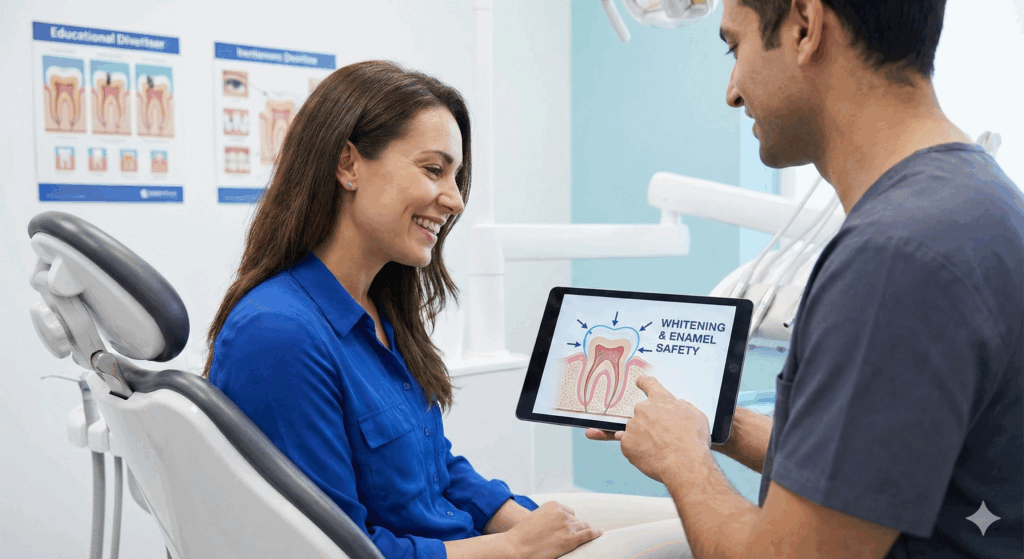
Most whitening is enamel-safe when it’s done correctly and not overused. Professional whitening and dentist-guided take-home whitening are designed to brighten teeth without “stripping” enamel. The most common side effect is temporary sensitivity, not permanent damage.
At 2nd Ave Family Dental, we take a patient-focused approach to whitening: clear expectations, comfort-first pacing, and guidance that fits your enamel health, gumline condition, and existing dental work—so you get a brighter smile without guesswork.
Want to learn more about smile improvements? Start here: Cosmetic Dentistry. If you haven’t had a recent checkup, this is often the best first step: Dental Cleanings and Exams. If older fillings, chips, or worn edges may affect your final look, explore: Restorative Dentistry.
Whitening and Enamel Safety: A Quick Visual
Whitening should feel manageable. If your teeth are “zinging,” your gums are burning, or you feel like you have to push through discomfort to see results, that’s usually a sign to pause and adjust your approach.
Key idea: Safe whitening is usually the plan you can follow consistently without pain.
How Whitening Works (And What Enamel Has to Do With It)
Enamel is the hard outer layer of your tooth. Whitening doesn’t work by “scraping off” enamel. Most whitening products use peroxide-based ingredients to break stain molecules into smaller pieces so teeth look lighter.
Whitening targets stains
It changes how stains look, not how much tooth you have.
Sensitivity can happen
Temporary sensitivity is common, especially if you whiten too frequently or already have sensitivity.
Gums need protection
Gum irritation usually happens when gel touches the gums, often from poor tray fit or overapplication.
Planning prevents mismatches
Crowns, veneers, and fillings don’t whiten the same way—so timing matters for an even-looking smile.
If you’re not sure which approach fits you, a quick evaluation can prevent trial-and-error (and unnecessary sensitivity).
Watch: Does Teeth Whitening Damage Enamel?
This video explains what happens during whitening and addresses a common fear: whether whitening “wears down” enamel or permanently weakens teeth.
As you watch, pay attention to the practical takeaway: whitening is safest when it’s done on healthy teeth and with a method that matches your sensitivity risk.
When Whitening Can Cause Problems (And What That Usually Means)
Most “damage” concerns are really about overuse or whitening at the wrong time. Whitening should not feel like a pain test. If it does, your plan likely needs adjusting.
Too frequent whitening: Back-to-back whitening can increase sensitivity and make teeth feel sharp or “zingy.”
Gel sitting on the gums: Poor tray fit or applying too much gel can irritate gum tissue.
Existing sensitivity or recession: Exposed root surfaces can make whitening feel uncomfortable.
Hidden dental problems: Cavities, cracks, or inflamed gums can flare during whitening and should be treated first.
Bottom line: If whitening is painful, pause and reach out. Most issues are fixable with a different product strength, schedule, or technique.
Watch: Zoom Whitening & Enamel Safety (What to Expect)
This video discusses professional whitening, including common side effects like temporary sensitivity and mild gum irritation—and how aftercare helps.
Helpful mindset: the goal is a result that looks natural and feels comfortable. If sensitivity is strong, you don’t “push through”—you adjust the plan.
Whitening Options and Enamel Safety (Simple Comparison)
Not all whitening is the same. The safest option is the one that matches your teeth, your sensitivity risk, and your timeline.
| Option | Best for | Why it can be safe | What to watch for |
|---|---|---|---|
| In-office whitening | Faster improvement with professional oversight | Controlled process and guidance to protect gums and manage sensitivity | Can feel intense for some patients without a customized plan |
| Dentist-guided take-home whitening | Steady whitening with flexible pacing | Often easier to tailor for sensitive teeth | Requires consistency; results are gradual |
| Over-the-counter kits | Mild improvement for mild staining | Can be safe when used correctly and not overused | Fit issues and gum irritation are common if misused |
| “Whitening” toothpaste | Surface stain maintenance | Helps reduce surface stains over time | Some can be abrasive; doesn’t lighten deeper stains like peroxide |
If you’re deciding between store-bought vs professional whitening, it often helps to start with a checkup: Dental Cleanings and Exams.
Watch: Best Ways to Whiten Without Overdoing It
This video breaks down common whitening choices and emphasizes a key point: safer whitening usually means the right method and the right schedule—not the strongest product.
If you’ve had sensitivity in the past, this is where dentist guidance matters most: we can help you whiten more comfortably by changing the approach, not forcing the process.
Watch: Do Common Whitening Methods Harm Enamel?
A dental professional breaks down whether common whitening methods harm tooth enamel and what science says.
Takeaway: enamel safety is strongly tied to technique and pacing. If you’re whitening too aggressively, you’re more likely to feel sensitivity (and hate the experience).
Watch: “Does Teeth Whitening Damage Enamel?” (Quick Answer)
Short clip clarifying that professional whitening does not weaken enamel when done properly and with the right guidance.
If you want an even, natural-looking result, it helps to evaluate existing dental work first (fillings, crowns, veneers), because those materials don’t whiten the same way as enamel.
Watch: Whitening Misconceptions and Enamel Safety
Video explaining common misconceptions about teeth whitening and enamel safety when done properly.
If whitening has felt “too harsh” in the past, that’s a sign your plan needs customizing—not a sign you have to give up on whitening entirely.
Step-by-Step: How to Whiten Safely (Dentist-Approved Basics)
If your goal is a brighter smile without sensitivity spiraling, this plan keeps it simple and safe.
Start with a clean baseline
A cleaning and exam help confirm gums and enamel are healthy before you whiten.
Rule out problems that should be treated first
We check for cavities, cracks, gum inflammation, and recession so whitening doesn’t trigger avoidable pain.
Choose the right method for your sensitivity risk
Some patients do best with slower take-home whitening rather than an intense same-day approach.
Use products as directed
Doubling up (more gel, more time, more days) is a common cause of sensitivity and gum irritation.
Manage sensitivity early
If sensitivity starts, pause and adjust. Spacing sessions out and using a sensitivity toothpaste often helps.
Plan for maintenance
Whitening is not permanent. Touch-ups and good hygiene help keep results natural-looking.
Need a strong preventive foundation? Start here: Dental Cleanings and Exams.
What You Should Take Away From This
Whitening should feel safe, predictable, and comfortable. Most long-term “problems” come from overuse, poor technique, or whitening when something else should be treated first.
Used correctly, whitening is generally enamel-safe. Temporary sensitivity is more common than permanent damage.
If it hurts, pause. Pain usually means your method, schedule, or tooth/gum health needs attention.
Planning prevents uneven results. Dental work doesn’t whiten like enamel—so timing matters.
A quick exam can save you trial-and-error. The safest whitening plan usually starts with a clean, healthy baseline.
Want a Brighter Smile Without the Guesswork?
If you want whitening results that feel safe and predictable, we can help you choose the best option for your teeth and comfort level.
We’ll evaluate enamel and gum health, review any existing dental work, and create a whitening plan you can follow comfortably.
Schedule a Whitening Consultation