
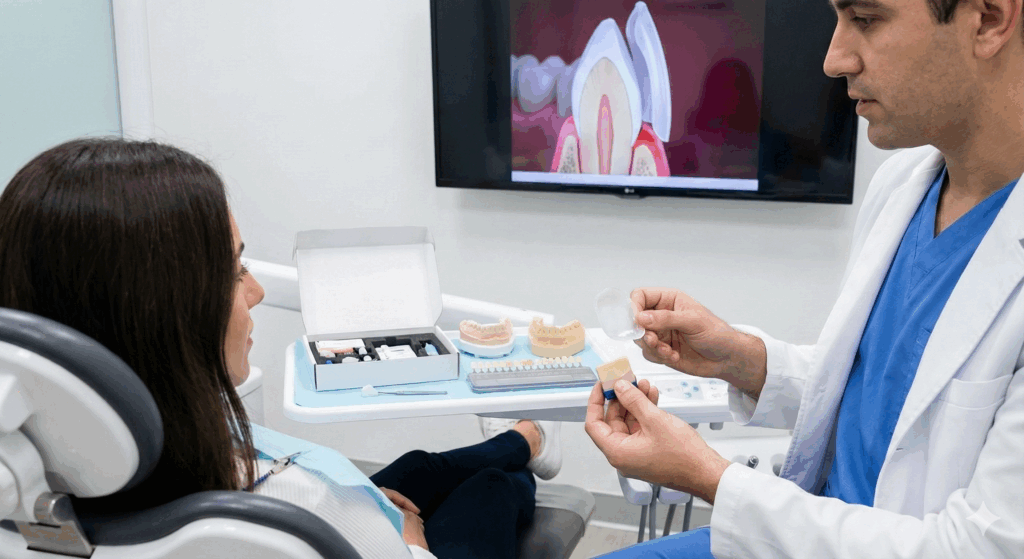
Veneers can be a confident, natural-looking smile upgrade. But many patients have two smart questions before they commit: are veneers permanent, and what are they actually made of?
This guide explains how veneers work, what “permanent” really means, and how different veneer materials affect looks, strength, and long-term maintenance.
If you want a dentist’s opinion on whether veneers are the right fit for your goals, start with a consultation: Contact the Office. You can also explore where veneers fit within cosmetic and restorative options here: Services.
What Veneers Are (Plain English)
Dental veneers are thin, custom-made shells that bond to the front surface of a tooth. Their purpose is to improve the appearance of your smile while still looking natural and feeling comfortable when you bite and speak.
Veneers are commonly used to address issues like chipped edges, uneven shape, gaps, and discoloration that does not respond well to whitening. Veneers can also help with mild cosmetic alignment concerns when a patient wants a straighter-looking smile without orthodontic treatment.
Veneers cover the front of the tooth: They are not full coverage like a crown.
They are custom-designed: Shape, size, and shade are chosen to fit your face and goals.
They are bonded in place: Veneers rely on dental bonding and proper technique for strength.
Healthy gums matter: Veneers look best when the gums around them are healthy and stable.
If it has been a while since your last checkup, it is usually best to start with a routine exam and cleaning before cosmetic planning: Explore Services.
Are Veneers Permanent?
Veneers are often described as “permanent,” but that word can mean two different things. The clearest, most accurate way to understand it is this:
The tooth change can be permanent
Many veneer cases require removing a small amount of enamel so the veneer sits naturally. Enamel does not grow back, so that part is often irreversible.
The veneers are not guaranteed to last forever
Veneers can last many years, but they can chip, loosen, stain at the edges, or need replacement as your mouth changes over time.
Replacement is normal planning
When veneers eventually wear out or break, they can often be replaced. A good plan includes long-term maintenance.
Habits change lifespan
Grinding, clenching, biting hard objects, and inconsistent dental visits can shorten veneer longevity.
“Permanent” should mean “intentional”
Veneers are a big decision. The best results come from careful planning, conservative preparation when appropriate, and a maintenance routine you can follow.
If you are unsure whether veneers are the right choice, we can help you compare options in a way that feels straightforward and low-pressure: Contact the Office.
Watch: Are Veneers Permanent?
This short reel addresses the “permanent” question directly and explains how veneers are bonded and why replacement planning matters.
If you are thinking about veneers, the goal is not only a beautiful result. It is a result that fits your bite, feels comfortable, and holds up long-term.
What Veneers Are Made Of
Most veneers are made from one of two main materials: porcelain (a type of dental ceramic) or composite resin. Both can look great. The right choice depends on your goals, your bite, and how much change you want.
Porcelain (ceramic) veneers: Custom-crafted shells designed to look lifelike. Many patients choose porcelain for its natural appearance and stain resistance.
Composite resin veneers: A tooth-colored resin material shaped and polished to improve appearance. Composite can be a practical option for smaller cosmetic changes.
Bonding materials: Veneer success is not just the veneer itself. The bonding system and technique are a major part of durability and fit.
Color planning: Veneer shade is chosen intentionally because veneers do not “whiten” later the way natural teeth can.
If you want help choosing the right approach, veneers should always be planned around your long-term oral health, not just a quick cosmetic change. Learn more about our approach here: About Us.
Quick Guide: Porcelain vs Composite Veneers
This is a practical starting point. Your dentist’s recommendation should be based on your enamel, gum health, and how your teeth contact when you bite.
| Option | What it is | Why patients choose it | What to keep in mind |
|---|---|---|---|
| Porcelain veneers | Custom-made ceramic shells bonded to the front of teeth | Natural look, strong aesthetics, stain resistant | Often requires more planning and may involve enamel reshaping |
| Composite veneers | Tooth-colored resin shaped and polished for cosmetic improvement | Conservative option for some cases, can be faster | May stain or wear sooner than porcelain and may need touch-ups |
| Alternative treatments | Other cosmetic or restorative options depending on tooth needs | Can be better when a tooth needs more support than a veneer provides | The best choice depends on tooth structure and bite forces |
What the Veneer Process Typically Looks Like
Patients usually want a clear picture of what will happen and how long it takes. While every plan is personalized, veneer treatment often follows a predictable sequence.
Consultation and smile goals
We listen to what you want to change and evaluate your teeth, gums, and bite so your result looks great and functions well.
Planning the shape and shade
We choose a natural-looking color and shape that fits your face, not an overly generic “one shade fits all” smile.
Tooth preparation (when needed)
If your plan requires it, a small amount of enamel is reshaped so veneers sit flush and do not look bulky.
Impressions or digital scans
We capture accurate details so your veneers fit precisely and look natural from every angle.
Try-in, bonding, and polish
We confirm fit and appearance, then bond the veneers and polish them so they blend with your smile.
Maintenance and long-term checks
We check your bite, review care habits, and recommend protection if you clench or grind.
If you want to talk through timing, comfort, and what to expect for your specific teeth, the easiest next step is a consultation: Contact the Office.
Watch: Veneer Process Walk-Through
This video shows the veneer process step-by-step, including tooth prep, material handling, and bonding. It is helpful if you want a visual explanation of how veneers are placed.
One key point: successful veneers depend on more than looks. The bite needs to feel natural, and the gums need to stay healthy around the veneer margins.
How Long Veneers Can Last
Veneers can last for many years when they are planned well and maintained consistently. Their lifespan depends on material choice, how your teeth contact when you chew, and habits like grinding or chewing ice.
Even if veneers are holding up well, routine dental visits are still important. That is how we monitor gum health, check for wear, and catch small issues early so they do not turn into bigger repairs later.
YouTube: Veneer Process and Lifespan
Your inputs did not include any YouTube links or video IDs for this article. If you share the YouTube URLs and IDs you want embedded, they can be added in this section using the same layout as the Instagram embeds.
Watch: Veneers Are a Big Decision
This reel emphasizes that veneers are often a long-term commitment and shows why planning matters for both cosmetic results and overall dental health.
If you are deciding whether to move forward, the most important question is not “Do veneers look good?” It is “Is this the right long-term plan for my teeth and bite?”
Common Questions Patients Ask Before Veneers
These are the most common concerns we hear, and they are all valid. A good veneer plan addresses them upfront, not after the fact.
Will veneers look fake? They should not. Natural results come from the right shape, subtle texture, and a shade that fits your face.
Will my teeth feel sensitive? Some temporary sensitivity can happen, especially early on. We plan conservatively and guide comfort steps if needed.
Do veneers get cavities? Veneers do not decay, but the natural tooth underneath can. Daily brushing and flossing still matter.
Can I whiten veneers later? Whitening changes natural enamel color, not veneers. That is why shade planning is important from the start.
What if I grind my teeth? Grinding can stress veneers. A night guard may be recommended to protect your investment.
If you are ready for personalized guidance, the next step is a consultation and a clear plan: Contact the Office.
What You Should Take Away From This
Veneers can be an excellent option when they are planned carefully and supported by good prevention. The right plan should feel comfortable, look natural, and stay stable long-term.
Veneers are often irreversible. Many cases involve enamel reshaping, so it is a decision to make intentionally.
Veneers are not “forever.” They can last many years, but replacement is a normal part of long-term planning.
Materials matter. Porcelain and composite both have a place, and the best choice depends on your goals and bite.
Maintenance protects results. Cleanings, exams, and daily hygiene help veneers look great and keep gums healthy.
Ready to Talk About Veneers?
If you want a smile upgrade that looks natural and feels comfortable, the best next step is a consultation. We will review your goals, evaluate your teeth and bite, and explain your best options clearly.
You should never feel rushed into veneers. A good plan starts with clarity and honest expectations.
Schedule a Consultation